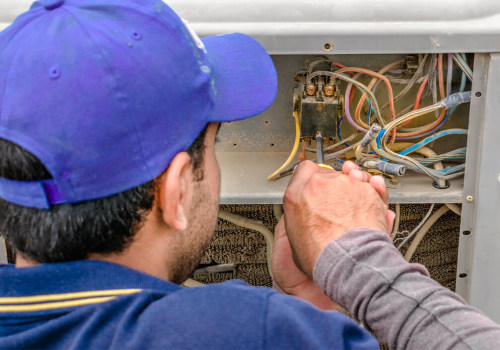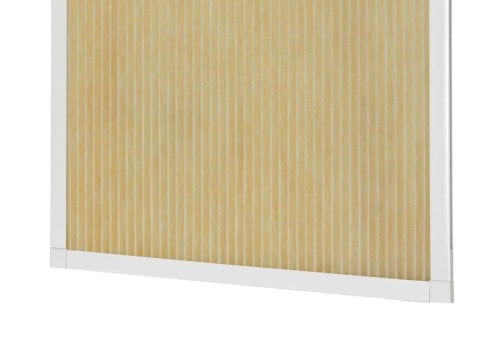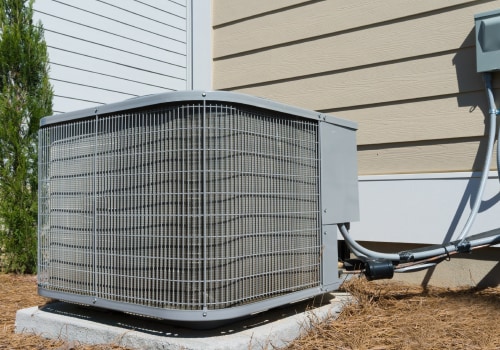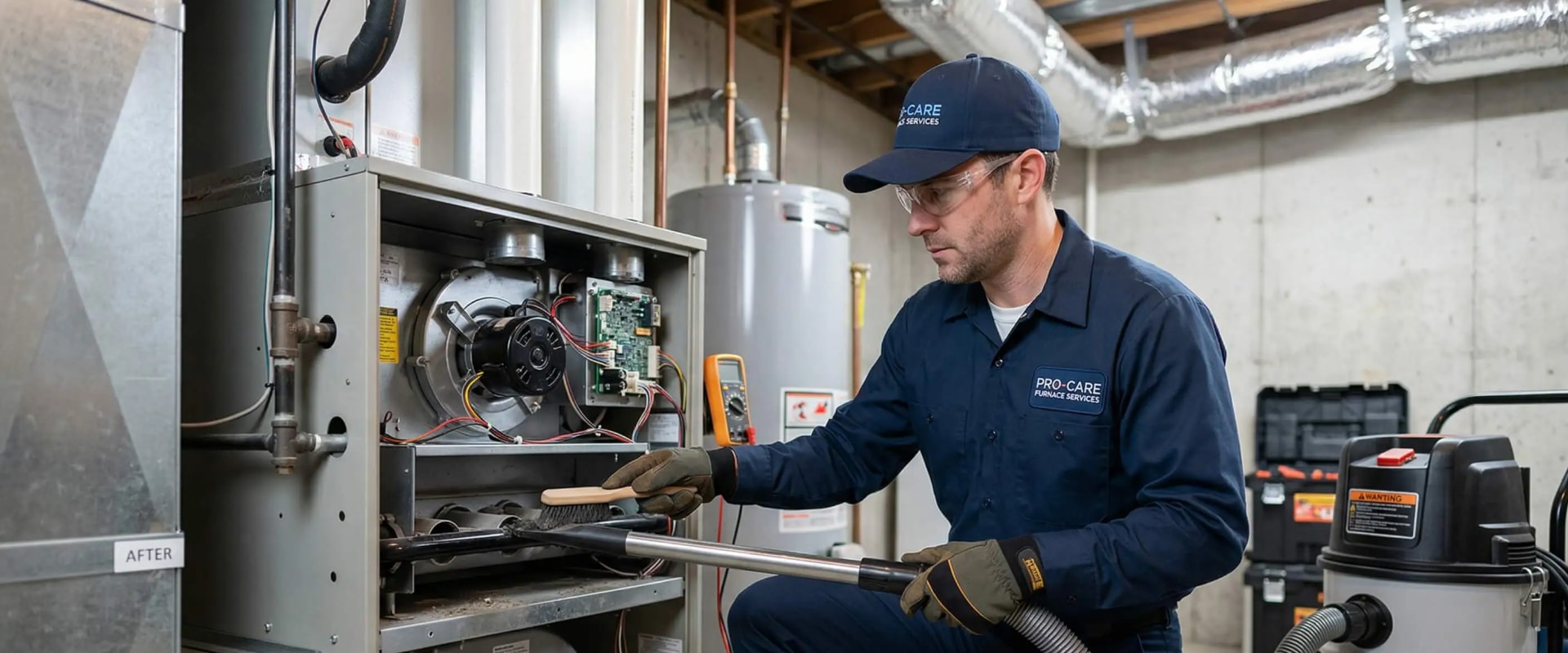
A dirty or clogged filter, blocked access panels, or a missing service history can limit what even the most skilled technician can accomplish in a single visit. In our experience, professional guidance on how to clean a furnace helps support more thorough cleanings, faster diagnostics, and better long-term performance from the system.
This page tells you exactly what to do — and why it matters — so your furnace cleaning visit delivers everything it should.
TL;DR Quick Answers
How to Clean a Furnace
Cleaning a furnace involves both what you do before a professional arrives and what a trained technician handles during the visit itself. Here is the complete picture:
What homeowners should do before every professional cleaning visit:
Install a fresh MERV 8 or MERV 11 filter one to two days before the appointment
Clear at least three feet of space around the furnace and all access panels
Locate the furnace make, model number, and installation date
Gather available service records and repair history
Write down any observed symptoms — unusual sounds, uneven heating, short cycling, or rising energy bills
What a professional technician cleans and inspects during a visit:
Burner assembly — removes dust, debris, and soot buildup from burner surfaces and ports
Blower motor and housing — cleans fan blades, removes debris, checks for balance and wear
Flame sensor — removes gritty buildup that causes ignition failure and system shutdowns
Heat exchanger — inspects for cracks, corrosion, and damage that can cause carbon monoxide leaks
Flue pipe and venting — checks for blockages, disconnections, and proper exhaust draft
System controls and safety switches — tests high-limit switch, ignition system, and thermostat calibration
What homeowners should never attempt themselves:
Heat exchanger disassembly or repair
Burner adjustment or gas connection service
Flame sensor removal on unfamiliar systems
Flue pipe inspection beyond visual assessment
The most important things to know:
Clean your furnace filter every 60 to 90 days — it is the single highest-impact maintenance habit a homeowner can build
Schedule professional cleaning annually — ideally in late summer or early fall before the heating season begins
A clogged filter alone can reduce system efficiency by up to 15% and trigger cascading component failures
The most dangerous furnace problems — cracked heat exchangers, carbon monoxide leaks, blocked vents — produce no visible warning signs and are only detectable by a trained technician
Top Takeaways
Preparation is part of the service. Install a fresh filter one to two days before your appointment. Clear the area around your furnace. Write down any symptoms your system has been showing. These steps consistently separate a thorough visit from an incomplete one — and they cost nothing but a few minutes.
Your furnace is your home's single largest energy expense — and its condition is the biggest variable. Space heating and air conditioning account for 52% of a household's total annual energy use. In our experience, the gap between what a clean system costs to run and what a neglected one costs isn't small — and it widens every season maintenance gets skipped.
The real cost of skipping maintenance compounds quickly. The U.S. Department of Energy confirms regular HVAC maintenance reduces heating and cooling costs by 10% or more. What that figure doesn't show: neglected systems develop cascading problems — restricted airflow, strained motors, worn components — that accelerate toward early failure faster than the savings math suggests.
Annual furnace inspections are a safety requirement — not a recommendation. The CDC reports more than 400 Americans die each year from unintentional CO poisoning unrelated to fires. The failure modes that make a furnace dangerous are: invisible, odorless, and silent. A trained technician with annual access to your system is the only reliable way to catch them before they become emergencies.
The furnaces that last longest belong to homeowners who treat maintenance as a system. After over a decade in this industry and more than two million households served, the pattern is consistent. The homeowners who get the most from every visit share four habits in common:
They prepare thoroughly before every appointment
They schedule professional service annually without exception
They document their system's service history and symptoms
They treat each visit as a process — not a transaction
Why Preparation Makes a Measurable Difference
A professional furnace cleaning is one of the most valuable maintenance investments a homeowner can make — but the results depend on more than the technician's skill. After working alongside HVAC professionals and helping millions of homeowners maintain their systems, we've found that the homes that get the most out of a cleaning visit are almost always the ones that arrived ready.
When a technician has clear access, a clean filter, and useful system information from the start, they can spend more time on the actual cleaning and inspection — and less time troubleshooting avoidable obstacles. These steps are simple, but they make a real difference in what gets accomplished.
Replace Your Air Filter Before the Appointment
This is the single most impactful step most homeowners skip. A heavily clogged filter forces a technician to work around reduced airflow from the start, which can mask underlying performance issues that would otherwise be easy to catch during a thorough inspection.
Install a fresh filter one to two days before your appointment. This gives the system a chance to circulate air normally, so the technician is evaluating your furnace under real operating conditions — not artificially strained ones.
If you're unsure which filter your system requires, check the filter slot for the printed dimensions. A MERV 8 or MERV 11 filter is appropriate for most residential furnaces and provides meaningful filtration without restricting airflow.
Clear the Area Around Your Furnace
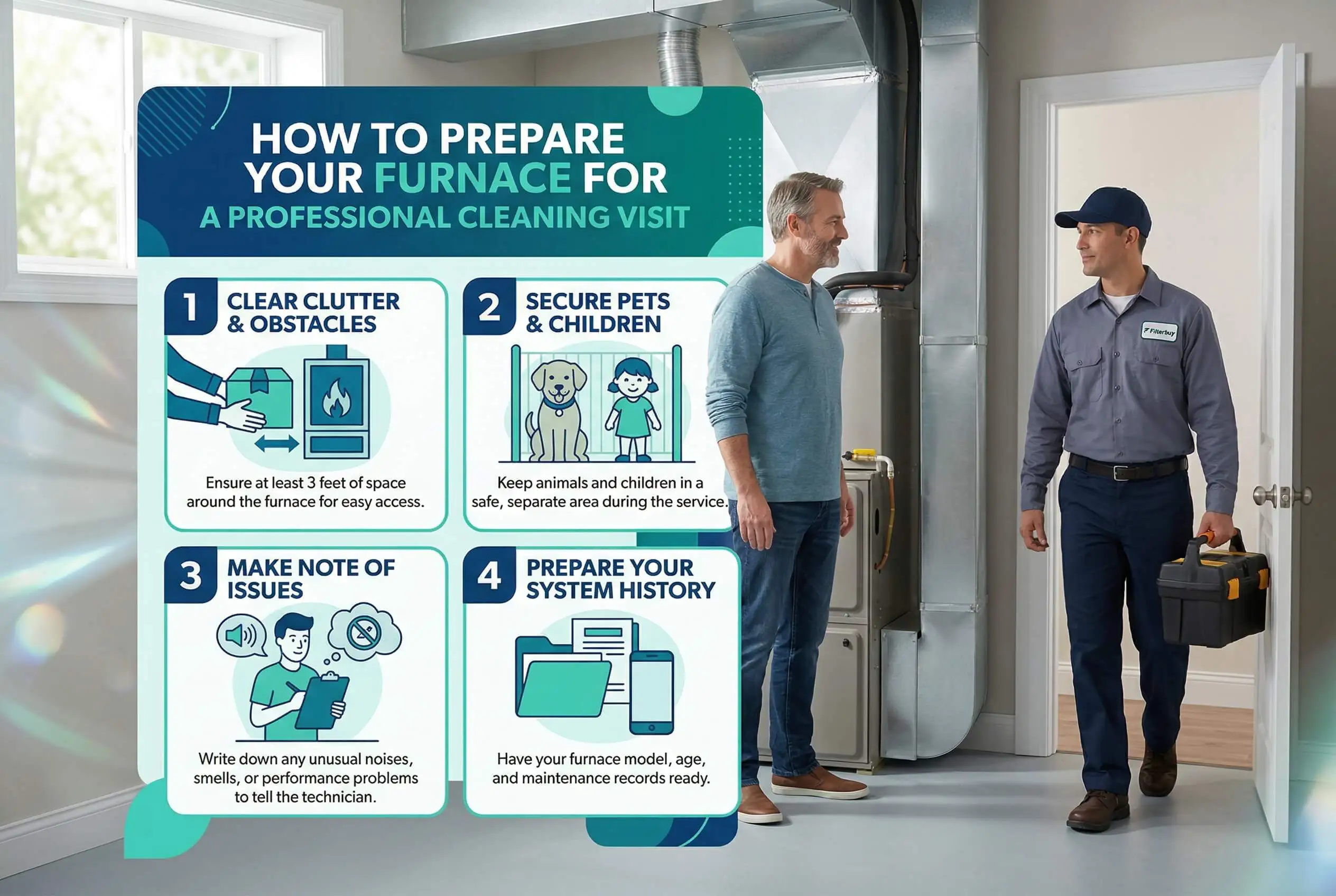
Technicians need unobstructed access to your furnace, its panels, and the surrounding area to perform a complete cleaning. In our experience, cluttered utility rooms and storage around the unit are among the most common reasons a visit runs long or components get skipped entirely.
Before your appointment, remove or relocate any items stored within three feet of the unit. This includes:
Boxes, bins, or stored items leaning against the furnace
Cleaning supplies or laundry products near the base
Anything blocking the flue pipe, exhaust vents, or filter access panel
A clear workspace allows the technician to remove panels, inspect the heat exchanger, clean the burners, check the blower, and evaluate furnace filters to help support cleaner airflow and better overall system performance without interruption.
Locate Your System's Service History
If you have records of previous tune-ups, repairs, or part replacements, gather them before the technician arrives. A service history gives the technician critical context — particularly for older systems — and helps identify patterns like recurring issues or components that may be nearing the end of their service life.
No documentation? Write down what you can recall, including the approximate date of your last cleaning, any repairs performed, and whether you've noticed any changes in performance or heating costs. That information is more useful than it might seem.
Note Any Symptoms or Changes in Performance
Before the visit, take a few minutes to walk through your home and pay attention to how your system has been behaving. Technicians can diagnose problems more efficiently when homeowners can describe what they've observed — even if it seems minor.
Common symptoms worth mentioning include:
Uneven heating between rooms
Unusual sounds when the furnace cycles on or off
A noticeable increase in energy bills without a change in usage
Short cycling — when the system turns on and off more frequently than normal
Any burning or musty smells when the heat runs
These observations help the technician know exactly where to look during the inspection, which means fewer overlooked issues and a more complete service visit.
Identify Your Furnace Make, Model, and Age
Your furnace's make, model number, and installation date give a technician instant insight into what components are likely to need attention and whether any known issues are associated with that unit. This information is typically printed on a label inside the front access panel or on the side of the cabinet.
Take a photo of this label and have it ready. If your furnace is more than 15 years old, let the technician know upfront — older units may require additional inspection time and are more likely to have worn components that should be evaluated closely.
Secure Pets and Plan for Unobstructed Access
It's a small detail, but an important one. Pets can slow down a service visit and create safety concerns near open panels and tools. Secure dogs, cats, or other animals in a separate room before the technician arrives.
If your furnace is located in a basement, crawl space, or utility closet with a narrow entry, make sure that path is clear as well. The easier it is for the technician to move in and out, the more time gets spent on the actual service.
What to Expect During the Visit
A standard professional furnace cleaning typically includes inspection and cleaning of the burners, heat exchanger, blower motor, and ignition system, as well as a check of the flue and venting for proper draft and safe exhaust. The technician will also test system controls, safety shutoffs, and overall operational efficiency.
The visit generally takes one to two hours depending on the system's age and condition. Being home for the full visit is recommended so you can ask questions, receive findings in real time, and approve any recommended repairs before work begins.
"In our experience servicing furnaces across thousands of homes, the visits that uncover the most — and deliver the most value — are almost never the result of what the technician brings to the job. They're the result of what the homeowner did the day before. A fresh filter, a clear utility room, and a simple list of symptoms tells us more in the first five minutes than an hour of diagnostics on a system we're walking into cold. The homeowners who treat preparation as part of the service are the ones who end up with fewer surprises, lower repair costs, and systems that actually last. That's not a coincidence — it's a pattern we've seen repeat itself across more homes than we can count."
Essential Resources
After manufacturing air filtration products for over a decade and helping more than two million households maintain healthier HVAC systems, we know that a prepared homeowner gets more out of every professional service visit. These seven resources from the U.S. Department of Energy, ENERGY STAR, and the Consumer Product Safety Commission give you the authoritative context to protect your system, understand what your technician should be doing, and make confident decisions before and after your cleaning visit.
The Professional Furnace Service Checklist Every Homeowner Should See Before Scheduling a Visit
ENERGY STAR's official maintenance checklist outlines every task a qualified contractor should complete during a professional furnace service — from testing gas connections and burner combustion to inspecting the heat exchanger and verifying system controls. In our experience, homeowners who review this checklist before their appointment arrive better prepared and leave with more confidence that the job was done right. https://www.energystar.gov/saveathome/heating-cooling/maintenance-checklist
What Your Furnace's Efficiency Rating Is Really Telling You About Your Heating Costs
Most homeowners don't realize how directly their furnace's AFUE rating connects to what they pay every winter — but after serving millions of households across the country, we've seen the difference a well-maintained, properly rated system makes on monthly bills. The U.S. Department of Energy's guide to furnaces and boilers explains how efficiency ratings work and when maintenance, retrofitting, or full system replacement is the smarter long-term investment. https://www.energy.gov/energysaver/furnaces-and-boilers
The Maintenance Tasks That Prevent the Breakdowns We See Most Often
The U.S. Department of Energy's firsthand account of furnace maintenance walks through the specific steps — vent pipe inspection, heat exchanger integrity checks, and combustion-efficiency testing — that prevent the failures we see most frequently in homes that have skipped annual service. Don't wait for a cold January night to find out what a missed tune-up costs. https://www.energy.gov/energysaver/articles/simple-maintenance-saves-costly-furnace-repairreplacement
Why Your Air Filter Is the Most Powerful Furnace Maintenance Tool You Already Own
A clogged filter is the number one cause of reduced furnace efficiency and premature system wear — and it's one of the most preventable problems we see across the homes we serve. ENERGY STAR's efficiency guide covers filter replacement intervals, duct sealing basics, and how to time your professional service visits so your technician evaluates your system under normal operating conditions, not artificially strained ones. https://www.energystar.gov/products/ask-the-experts/how-keep-your-hvac-system-working-efficiently
The Federal Safety Case for Annual Furnace Inspections — Straight From the CPSC
Skipped furnace maintenance isn't just an efficiency problem — it's a safety one. The U.S. Consumer Product Safety Commission explains how carbon monoxide risks, vent blockages, and combustion failures are the direct result of neglected annual service. We make this resource available because protecting your family's health starts well before a technician ever sets foot in your home. https://www.cpsc.gov/Newsroom/News-Releases/1997/CPSC-Urges-Annual-Fuel-Burning-Appliance-Inspection-to-Prevent-Deaths-Fires
What Most Homeowners Don't Know About Flue Safety Until It's Too Late
Most of what makes a furnace dangerous is invisible — and that's exactly why we believe in making the invisible visible. The CPSC's heating safety guidance covers flue and chimney inspection protocols, CO alarm placement requirements, and ventilation standards for gas furnaces — the hidden hazards that a trained technician is specifically looking for during every professional service visit. https://www.cpsc.gov/Newsroom/News-Releases/2006/CPSC-Warns-Of-Hazards-from-Furnaces-Space-Heaters-and-Fireplaces
A Step-by-Step Look at What a Professional Furnace Cleaning Actually Covers
One of the most common questions we hear from homeowners is: what is the technician actually doing in there? Carrier's nine-step professional cleaning guide details exactly what a trained technician works through — from removing and cleaning the blower assembly and flame sensor to inspecting the heat exchanger and verifying system controls. Read this before your appointment so you know what a complete service visit looks like from start to finish. https://www.carrier.com/residential/en/us/products/furnaces/furnace-service/furnace-cleaning/
These essential resources help homeowners understand professional furnace cleaning, heating efficiency, and safety standards while showing how top air filters support better system performance, cleaner airflow, and smarter maintenance decisions before and after service.
Supporting Statistics
After over a decade of manufacturing air filtration products and serving more than two million households, we've found that these statistics don't just describe a national trend — they describe a pattern we recognize in home after home, season after season.
Space Heating Accounts for More Than Half of What Your Home Spends on Energy Every Year
According to the U.S. Energy Information Administration's 2020 Residential Energy Consumption Survey, space heating and air conditioning together account for 52% of a household's total annual energy use.
What consistently surprises homeowners isn't the size of that number — it's what's driving it. In our experience, the biggest factor is rarely the age of a system. It's the condition of it. A furnace running on a dirty blower, clogged filter, or neglected burners:
Cycles longer to deliver the same output
Works harder than the system was designed to sustain
Loses efficiency gradually — in a way that's easy to miss until the bill arrives
The gap between what a clean system costs to run and what a neglected one costs to run widens every season maintenance gets skipped. https://www.eia.gov/energyexplained/use-of-energy/homes.php
A Regular Maintenance Schedule Can Cut Heating and Cooling Costs by 10% or More
The U.S. Department of Energy confirms that following a regular HVAC maintenance schedule can reduce annual heating and cooling costs by 10% or more — and meaningfully extend equipment lifespan.
That figure is consistent with what we observe when comparing households that schedule annual professional cleanings against those that don't, especially when high-quality pleated air filters are part of the maintenance routine. But here's what the statistic alone doesn't capture:
A system neglected for two or three seasons doesn't just cost 10-20% more to run
It develops compounding problems — worn components, restricted airflow, strained motors
Those problems push it toward early failure faster than the savings math suggests
The 10% figure reflects maintenance done consistently. The cost of maintenance skipped is a different calculation entirely. https://www.energy.gov/sites/default/files/2021-08/ES-HomeHeatingandCooling_081221.pdf
More Than 400 Americans Die Each Year From Carbon Monoxide Poisoning Unrelated to Fires
The CDC reports that annually in the United States:
More than 400 Americans die from unintentional CO poisoning not linked to fires
More than 100,000 visit emergency departments
More than 14,000 are hospitalized
The CPSC identifies malfunctioning fuel-burning appliances — furnaces with blocked vents, cracked heat exchangers, and missed annual inspections — as a primary contributing source.
We share this statistic not to alarm, but because it reflects something we've learned clearly after years in this industry: the most dangerous problems a furnace can develop are also the most invisible ones.
A cracked heat exchanger doesn't rattle
A blocked flue doesn't smell
A furnace leaking carbon monoxide looks and sounds exactly like one that isn't
Professional annual inspections exist precisely because these are the failure modes no homeowner can detect on their own — and no filter change will prevent. https://www.cdc.gov/carbon-monoxide/about/index.html
Airflow Problems Alone Can Reduce Your Furnace's Efficiency by Up to 15%
ENERGY STAR's official maintenance checklist identifies dirty blower components and restricted filters as capable of reducing system efficiency by up to 15% on their own.
After manufacturing filters for over a decade and tracking the concerns of more than two million households, we can say with confidence that airflow restriction is the most underestimated performance killer in residential HVAC. It doesn't announce itself. The pattern we see most often:
Filter becomes restricted — airflow drops gradually
System compensates by running longer cycles
Energy bills climb slowly — easy to attribute to weather or rates
Components strain under sustained overwork
A professional cleaning reveals months of preventable wear
Installing a fresh filter before your professional cleaning visit and clearing the space around your furnace are the two steps that cost the least and prevent the most. We've seen the difference between a clean inspection and a costly one come down to exactly that. https://www.energystar.gov/saveathome/heating-cooling/maintenance-checklist
Final Thoughts
Most home maintenance advice tells you what to do. It rarely tells you what people inside this industry actually observe when preparation gets skipped — and what changes when it doesn't.
After manufacturing air filtration products for over a decade and helping more than two million households maintain healthier HVAC systems with MERV 13 filters, our opinion on this topic is clear: a professional furnace cleaning is only as effective as the homeowner who prepared for it.
That's not a criticism. It's a pattern we've observed consistently across thousands of service interactions, in homes of every age, size, and system type.
What We've Seen When Homeowners Prepare
When a technician walks into a cleared utility room, finds a fresh filter already installed, and receives a short list of observed symptoms, the visit delivers more. Not because the technician is more skilled that day — but because nothing is standing between them and the actual work.
What that preparation really represents:
It's not a courtesy to the technician — it's an investment in your own outcome
Homeowners who treat the visit as a shared process consistently get more from it
Small steps taken the day before have an outsized effect on what gets found and fixed
Our Opinion on the Safety Dimension
This point doesn't get stated plainly enough: annual furnace maintenance is not a comfort upgrade. It is not optional. It is the primary mechanism by which the most dangerous furnace failure modes get caught before they become emergencies:
Cracked heat exchangers
Blocked vents and flue pipes
Carbon monoxide leaks with no visible warning signs
The CDC data on CO poisoning deaths is not abstract to us. It reflects the exact failure pattern that routine professional inspections are designed to interrupt — and that no homeowner can reliably detect on their own.
What the Longest-Lasting, Lowest-Cost Furnaces Have in Common
After serving more than two million households, the furnaces that last longest, cost the least to run, and cause the fewest safety concerns all share one thing:
They belong to homeowners who treat maintenance as a system — not a reaction
A fresh filter is installed before every professional visit
The workspace is cleared and access is unobstructed
Service history is documented and within reach
Symptoms are noted and shared before the technician begins
None of it is complicated. All of it matters more than most homeowners realize — until they've skipped it once and seen the difference.
Prepare your furnace the right way. Your technician will do better work — and your family will be safer for it.
FAQ on How to Clean a Furnace
Q: How often should a furnace be professionally cleaned?
A: Once a year — ideally in late summer or early fall. After serving more than two million households, annual cleaning is the most effective maintenance interval for the vast majority of residential systems. Two things happen when a year gets skipped:
Buildup, wear, and developing issues compound undetected for a full season
The next visit takes longer, uncovers more, and costs more than it should have
Annual professional cleaning is not a preference. It is the baseline.
Q: What is the difference between a DIY furnace cleaning and a professional furnace cleaning?
A: DIY cleaning covers what a homeowner can safely reach:
Air filter replacement
Exterior surface wiping
Clearing the area around the unit
Professional cleaning covers what a homeowner can't reach or assess:
Burner assembly inspection and cleaning
Blower motor service
Flame sensor testing and cleaning
Heat exchanger inspection
After working alongside HVAC professionals for over a decade, here is what we know with certainty: the issues that cause the most damage — cracked heat exchangers, blocked flue pipes, failing flame sensors — are invisible without specialized tools and training. DIY maintenance is worth doing. It does not replace what a professional finds.
Q: What should I do to prepare my furnace before a professional cleaning visit?
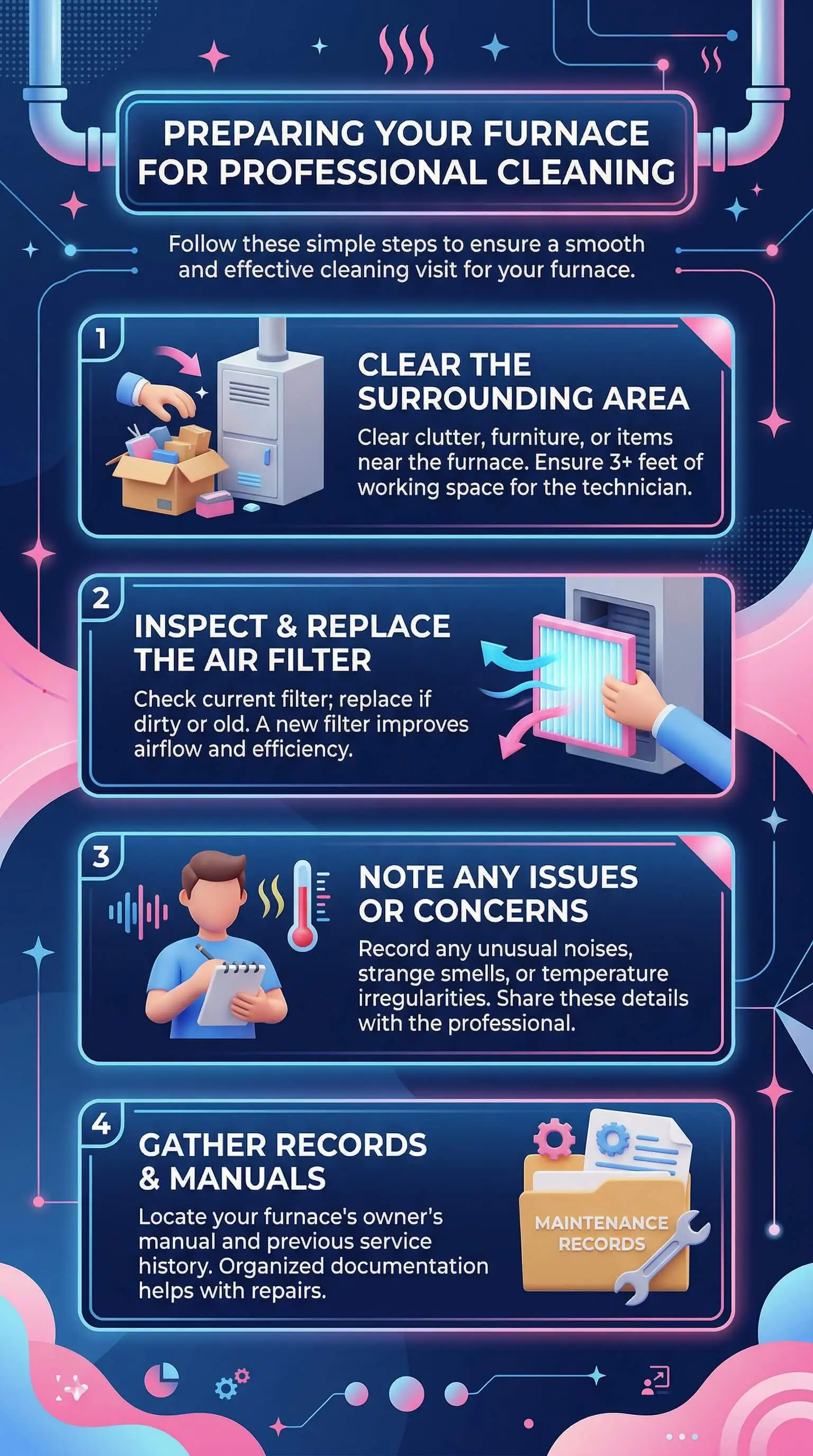
A: Five steps that consistently improve the quality of every professional visit:
Install a fresh filter one to two days before the appointment
Clear at least three feet of space around the furnace and all access panels
Gather available service records and repair history
Write down observed symptoms — unusual sounds, uneven heating, short cycling, rising energy bills
Locate the furnace make, model number, and installation date — printed on the label inside the front access panel
In our experience, these five steps do more to improve the outcome of a professional visit than anything that happens during the visit itself.
Q: What are the signs that a furnace needs professional attention beyond a standard cleaning?
A: After tracking service histories across thousands of households, these are the symptoms that require immediate professional evaluation — not a scheduled appointment, an urgent one:
Yellow or orange flames instead of a steady blue flame
Banging, rattling, or squealing during startup or operation
Burning or musty smell when the heat runs
Short cycling — the system switching on and off more frequently than normal
Visible soot, rust, or corrosion near the cabinet or flue pipe
A sudden unexplained increase in heating costs
Any one of these symptoms warrants a call. More than one means don't wait.
Q: Can a dirty air filter really damage a furnace?
A: Yes — and it is the most preventable form of furnace damage we see. Here is the progression we observe most often:
Filter becomes restricted — airflow drops
Blower motor strains to compensate
Heat exchanger overheats under sustained stress
High-limit safety switch triggers — short cycling begins
Components wear years ahead of schedule
ENERGY STAR identifies airflow problems as capable of reducing system efficiency by up to 15% on their own. After manufacturing filters for over a decade, we've seen this progression repeat across thousands of homes — always gradually, always quietly, and always more expensive to reverse than to prevent. Replace your filter every 60 to 90 days. It is the lowest-cost, highest-impact maintenance habit a homeowner can build.
Ready to Schedule Your Professional Furnace Cleaning Visit?
You've done the research and you know what a well-prepared furnace cleaning visit looks like — now it's time to make it happen. Contact Filterbuy HVAC Solutions today to schedule your annual furnace cleaning and put everything covered on this page to work for your home and family.